
Enzyme Activity Assay: What Actually Matters in Real Lab Conditions
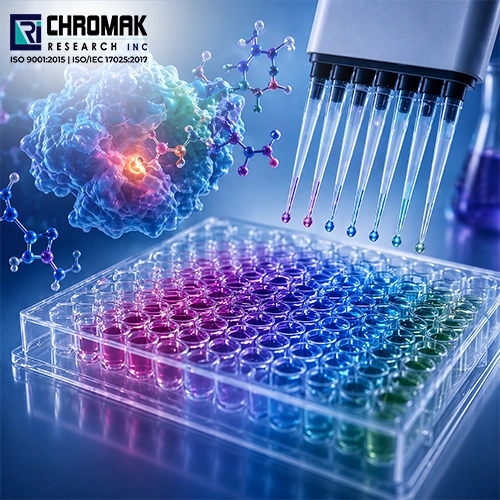
If you’ve ever worked with enzymes in a lab, you already know one thing things don’t always behave the way textbooks say they should.
An enzyme might work perfectly one day, and the next day, the same setup gives you slightly off results. Most of the time, it comes down to small factors that are easy to overlook.
That’s exactly why enzyme activity assays are so important. They don’t just measure reactions they help you understand whether your system is actually behaving the way you think it is.
What Is an Enzyme Activity Assay?
In simple terms, it’s a way to measure how fast an enzyme is doing its job.
You’re basically checking: how efficiently a substrate is being converted into a product under specific conditions.
Most labs use spectrophotometric or fluorometric methods because they’re practical and relatively reliable. But the method itself is only part of the story the setup matters just as much.
Why This Test Matters More Than It Looks
On paper, enzyme assays seem straightforward. In practice, they’re not.
Even small changes like a slight temperature variation or pH shift can throw off your results. And if you're working in pharma or diagnostics, that’s not something you can ignore.
That’s why these assays are used to:
Without this step, you're basically assuming everything is working fine which is risky.
The Methods Most Labs Actually Use
There are a few standard approaches, and each has its place:
In reality, the “best” method depends less on theory and more on what your lab setup allows.
Where Things Usually Go Wrong
This is the part people don’t talk about enough.
Most enzyme assay issues don’t come from the method—they come from conditions.
For example:
Individually, these seem small. Together, they can completely affect your results.
How Labs Actually Keep Results Accurate
In well-run labs, consistency is everything.
That usually means:
It sounds basic, but skipping even one of these steps is where problems start.
A Few Practical Tips That Make a Difference
If you're trying to improve your assay results, these help more than most people expect:
These are the kinds of habits that improve data quality over time.
Where These Assays Are Actually Used
You’ll see Enzyme activity assays across a lot of industries:
Basically, anywhere enzyme behavior matters—which is more places than most people realize.
Why Labs Work with Chromak Research
When results need to be consistent and defensible, many labs prefer working with specialized testing partners.
Chromak Research's main goal is to provide enzyme activity testing that is not only accurate on paper, but also works in real life. We do this by using experienced teams, proven methods, and modern equipment.
Final Thought
Enzyme activity assays aren’t complicated—but they are sensitive.
And in most cases, the difference between “good” and “reliable” results comes down to how carefully the test is executed. If you get the conditions right, everything else becomes much easier.
FAQs
Disclaimer: The content on this blog is provided in good faith and is intended for general informational purposes. The information contained in this blog might be provided on an “as is” basis, based on Wikipedia, Google, and other scientific articles. We are not liable for any injuries or damages for the use of the information. Please do your research before you use this information for any purpose.