
Ensuring Excellence, Detecting Impurities Through Raw Materials Testing First
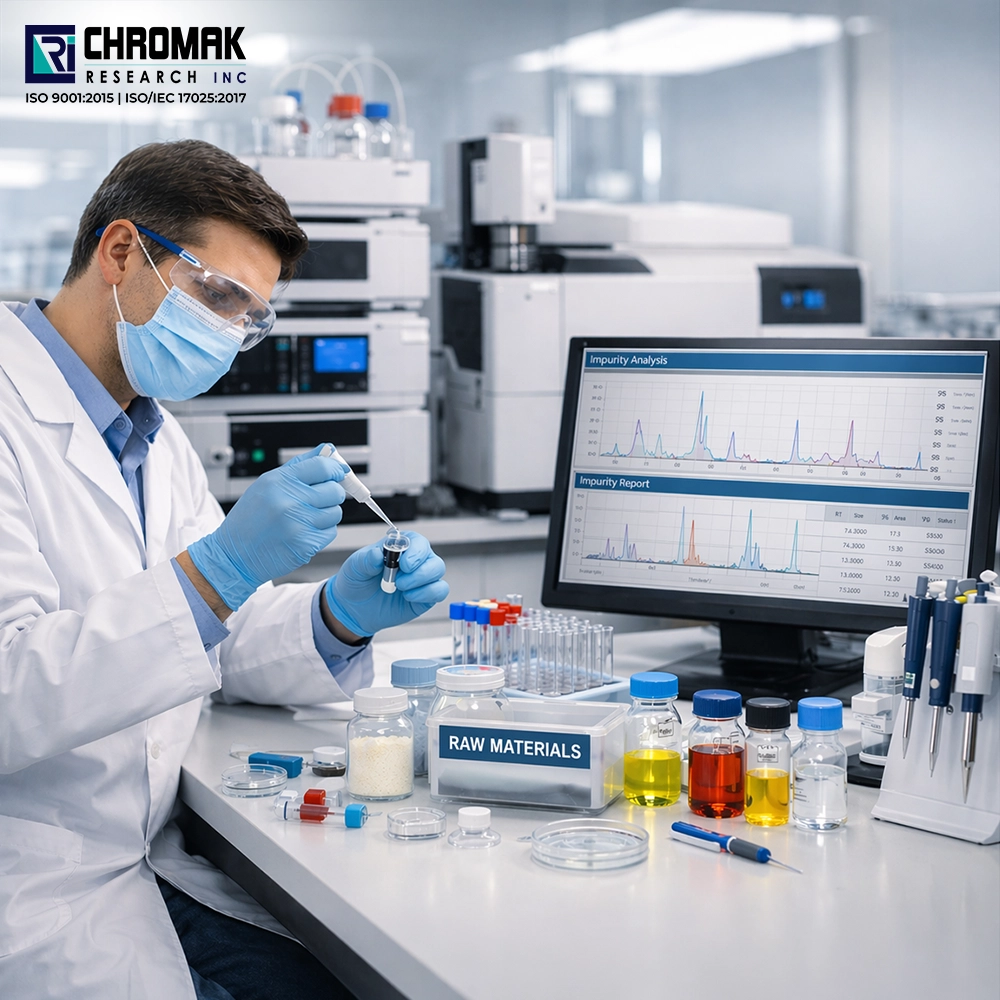
Quality in the pharmaceutical industry is not only a requirement but also a responsibility. Any finished product is as good as the raw materials that are used in formulating it. Here, Raw Materials Testing becomes very important. It ensures that all materials entering are of high regulatory standards and free of harmful impurities that could affect safety and efficacy.
What is Raw Materials Testing?
Raw Materials Testing means it is the evaluation of pharmaceutical raw materials as per criteria set by formal Pharmacopeial standards, such as USP, EP, and JP. Pharmacopeia standards define the identity, purity, strength, and permissible impurity levels.
This is an important form of Raw Materials Testing specification testing, where the materials used are always checked to ensure that they are of a certain standard of quality, as they are supposed to be before the production process takes place.
Why Raw Materials Testing is Important in Pharmaceuticals.
Understanding why Raw Materials Testing is important in pharmaceuticals is key to maintaining product integrity. Impurities in raw materials can lead to reduced effectiveness, toxicity, or even product recalls.
Proper testing:
Types of Impurities in Pharmaceuticals
One of the key areas of Raw Materials Testing is to determine the nature of impurities in pharmaceuticals. These impurities may be a result of different sources, like raw materials, manufacturing, or storage.
1. Organic Impurities include:
- Starting material residues
- By-products from chemical reactions
- Degradation products
2. Inorganic Impurities
- Heavy metals (lead, arsenic, mercury)
- Residual catalysts
- Reagents and salts
3. Residual Solvents
4. Microbial Contamination
Common Impurities Detected in Raw Materials Testing
Talking of Common Impurities that are encountered in Pharmaceutical Raw Materials Testing, some of the key contaminants that are commonly encountered are:
Such impurities have to be detected and controlled in order to meet the regulatory and safety requirements.
Analytical Testing Methods for Impurities
The modern laboratories utilize sophisticated methods of testing impurities with high precision using the latest Analytical testing methods of analysis.
The following are some of the methods that are used:
The following are the Analytical testing methods to ensure the proper detection and measurement of impurities, which give rise to quality control.
Why choose Chromak Research for Raw material testing?
Are you looking for why choose Chromak Research for Raw Materials Testing? For reliable testing, Chromak Research provides expertise, precision, and a commitment to quality.
Chromak Research offers:
Working with Chromak Research, the companies can be sure that their raw materials are of the highest quality without compromise.
Conclusion
In the pharmaceutical industry, the quality of the final product depends on the quality of the raw materials used. Raw Materials Testing according to compendial standards is vital for pinpointing and managing impurities that might compromise a product's safety or efficacy. Each phase, from grasping the nature of these impurities to employing sophisticated Analytical testing methods to detect them, is of utmost importance.
With a dependable partner like Chromak Research, manufacturers can guarantee that consumers receive products that are safe, effective, and of the highest quality.
Frequently asked questions (FAQs)
Disclaimer: The content on this blog is provided in good faith and is intended for general informational purposes. The information contained in this blog might be provided on an “as is” basis, based on Wikipedia, Google, and other scientific articles. We are not liable for any injuries or damages for the use of the information. Please do your research before you use this information for any purpose.